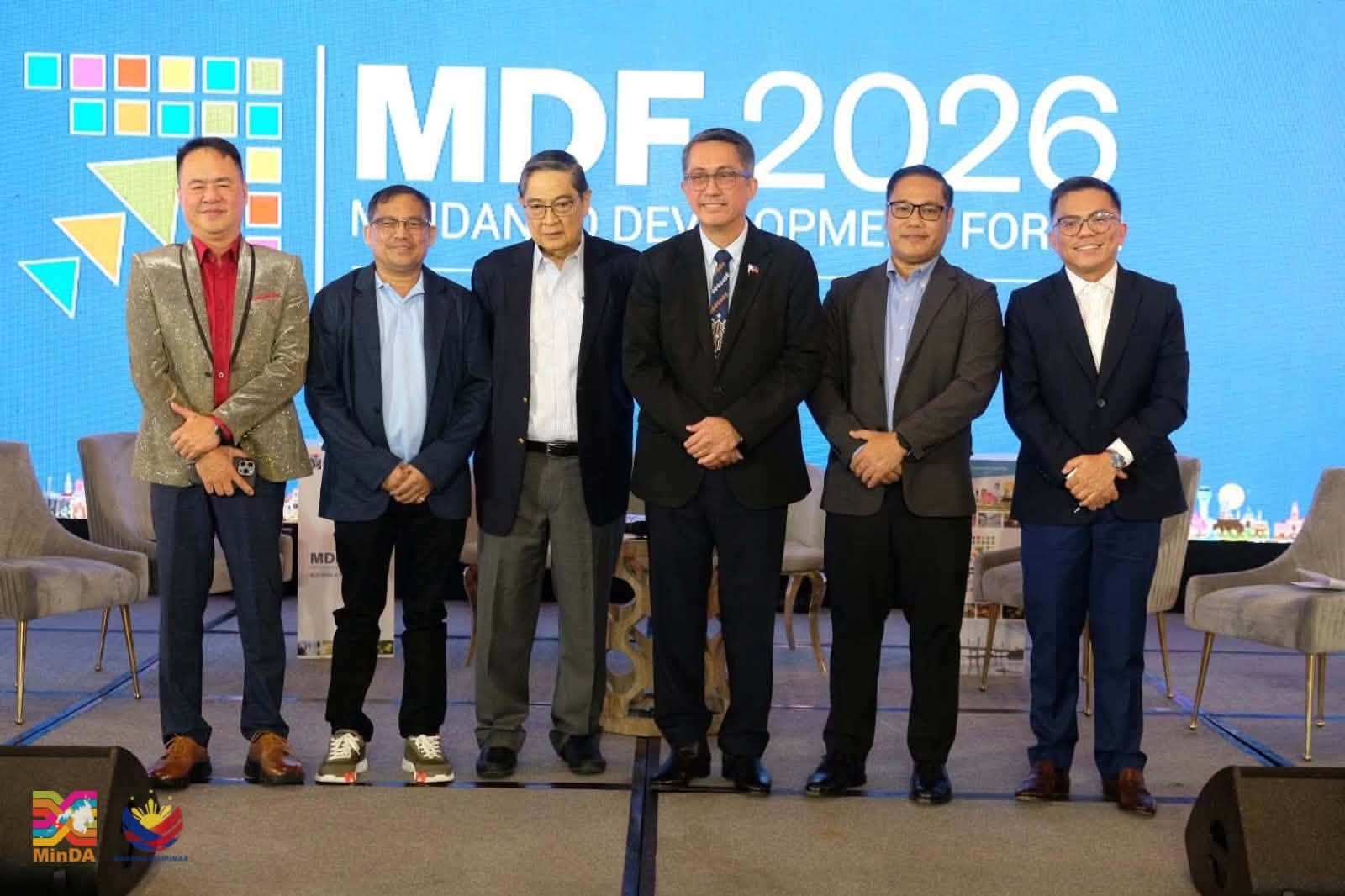
DAVAO CITY — The Mindanao Development Authority (MinDA) is advancing efforts to turn Mindanao’s economic assets into viable investments by connecting government priorities, private-sector participation, and local development initiatives during the second day of the Mindanao Development Forum (MDF) 2026.
MinDA Chairperson, Secretary Leo Tereso A. Magno underscored the need to sustain the forum’s momentum by building on discussions on agricultural value chains, public-private partnerships (PPPs), and the investment opportunities emerging across Mindanao, including those linked to the Bangsamoro Autonomous Region in Muslim Mindanao (BARMM).
“We strengthened our push for public-private partnerships, and we are truly glad to see so many of our private sector friends actively participating in the sessions all day,” Magno said, stressing the importance of collective action in translating Mindanao’s potential into inclusive economic growth.
The second day of the forum featured discussions on financing, investment facilitation, sustainable industrialization, and the role of local governments in preparing projects for implementation, reinforcing the need to connect development plans with appropriate financing mechanisms and private sector participation.
Presidential Adviser on Peace, Reconciliation and Unity, Secretary Mel Senen Sarmiento emphasized that peace agreements must be supported by capable institutions, effective local governance, and sustainable livelihood opportunities to build investor confidence and help communities move from conflict toward productive economic activity.
“Peace and development are not competing priorities. In reality, they complement each other and are mutually reinforcing,” Sarmiento said.
Discussions covered developing high-value agricultural industries, investment promotion, sustainable resource management, economic-zone development, and financing mechanisms, with speakers emphasizing the need to connect local assets and development plans with investors and viable project proposals.
Department of Environment and Natural Resources (DENR) Undersecretary for Field Operations in Mindanao, Usec. Joselyn Marcus Fragada presented opportunities for sustainable forest-land development and critical-minerals processing, citing 500,011 hectares of potential investment areas across 2,451 validated parcels in Mindanao, while emphasizing that protected forests, critical watersheds, and conservation areas remain off-limits.
Usec Fragada also identified opportunities for commercial agroforestry, including coffee, cacao, and rubber, as well as tree plantations and renewable-energy development, underscoring the potential to expand domestic value-adding industries while maintaining environmental safeguards.
Meanwhile, Anti-Red Tape Authority (ARTA) Director General, Secretary Ernesto V. Perez highlighted the need for local governments to move beyond identifying development priorities and prepare technically sound, financially viable projects that can attract funding, emphasizing the importance of transparent procurement, sound financial management, and accountable institutions in building investor confidence.
Further, Philippine Economic Zone Authority (PEZA) Economic Zone Administrator and Head of Mindanao Cluster, Atty. Abdullah Adel-khan Alug outlined opportunities in advanced manufacturing, electronics, semiconductors, agro-industrial processing, digital services, and the halal economy, noting that investment-ready sites, reliable infrastructure, skilled workers, and stronger industry linkages are essential to attracting enterprises and generating quality employment.
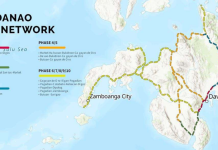
Magno also cited more than 100 priority infrastructure projects under the BIMP-EAGA framework slated for implementation in Mindanao, which are expected to improve connectivity, lower logistics costs, strengthen public services, and expand economic opportunities.
United Nations Development Programme (UNDP) Resident Representative, Mr. Christophe Bahuet highlighted the growing role of local governments in shaping investment conditions and the need to connect local development priorities with financing institutions, government agencies, banks, and private businesses.
Also present were PPP Center Executive Director, USec. Rizza Blaco-Latorre and Basilan Governor Hon. Mujiv S. Hataman, alongside session panelists Davao del Norte Governor and RDC XI Chairperson, Hon. Edwin I. Jubahib; Dinagat Islands Governor and RDC Caraga Chairperson, Hon. Nilo Demerey, Jr.; PPP Center Deputy Executive Director, ASec. Eleazar E. Ricote; Former Presidential Assistant of the Office of the President and ADB Executive Director, Mr. Paul Dominguez; and SEARCA Deputy Director, Dr. Rico Ancog.
The Forum’s investment discussions also highlighted the potential of public-private partnerships to support infrastructure development, improve logistics, and strengthen Mindanao’s competitiveness, alongside opportunities in sustainable agriculture, renewable energy, tourism, and higher-value manufacturing.
President Ferdinand R. Marcos Jr.’s Executive Order No. 122 established a policy framework for the sustainable development of critical minerals, complementing the MinDA’s efforts to promote responsible resource development and greater domestic value addition.
Under the Marcos administration’s public-private partnership framework, MinDA continues to support project development and coordination to help advance viable investments in Mindanao.
Through the Mindanao Agenda, MinDA supports President Ferdinand R. Marcos Jr.’s development priorities by strengthening trade and industry, food security, infrastructure, and ecological integrity to attract investments, create jobs, and drive inclusive and sustainable growth across Mindanao.