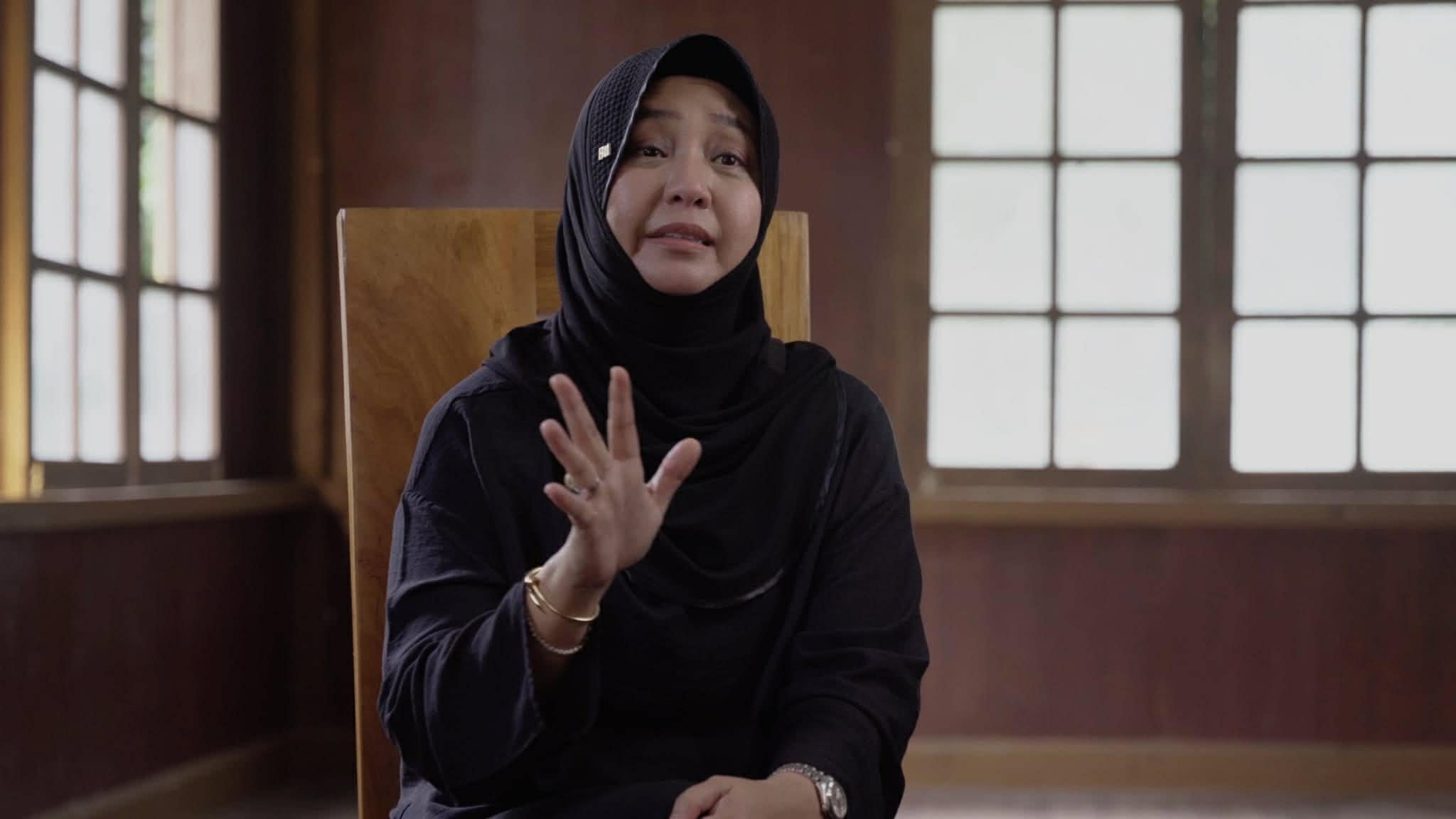
COTABATO CITY — Retaining hope in the pursuit of the territory, Princess Jacel Kiram—daughter of the late Sultan of Sulu, Jamalul Kiram III—has once again appealed to the Philippine national government to actively push for the country’s claim over Sabah.
She emphasized that the long-standing territorial and private property dispute holds immense significance for the nation, potentially helping ease the economic burdens of Filipinos, particularly amid soaring oil prices. Sabah is widely recognized for its rich oil deposits.
Historically, the claim stems from the Sultanate of Sulu, which originally received Sabah (North Borneo) as a gift from the Sultan of Brunei in gratitude for helping suppress a rebellion in the region.
Historical context and legal basis
Kiram pointed out that historical records and global events—including the 2022 French arbitration decision favoring the Sultanate of Sulu—reinforce the validity of the claim. At the time, the arbitration court ordered Malaysia to pay approximately $14.9 billion, recognizing that previous annual lease payments no longer matched modern economic values.
According to Kiram, these annual payments—which began under the British North Borneo Company and were continued by Malaysia following the formation of the Federation of Malaysia in 1963—served as a clear acknowledgment of the Sultanate’s rights. However, these payments ceased around 2013.
“This is proof that they were paying rent to the Sultanate of Sulu,” Kiram said, adding that Sabah spans over 73,904 square kilometers and contributes significantly to Malaysia’s Gross Domestic Product (GDP).
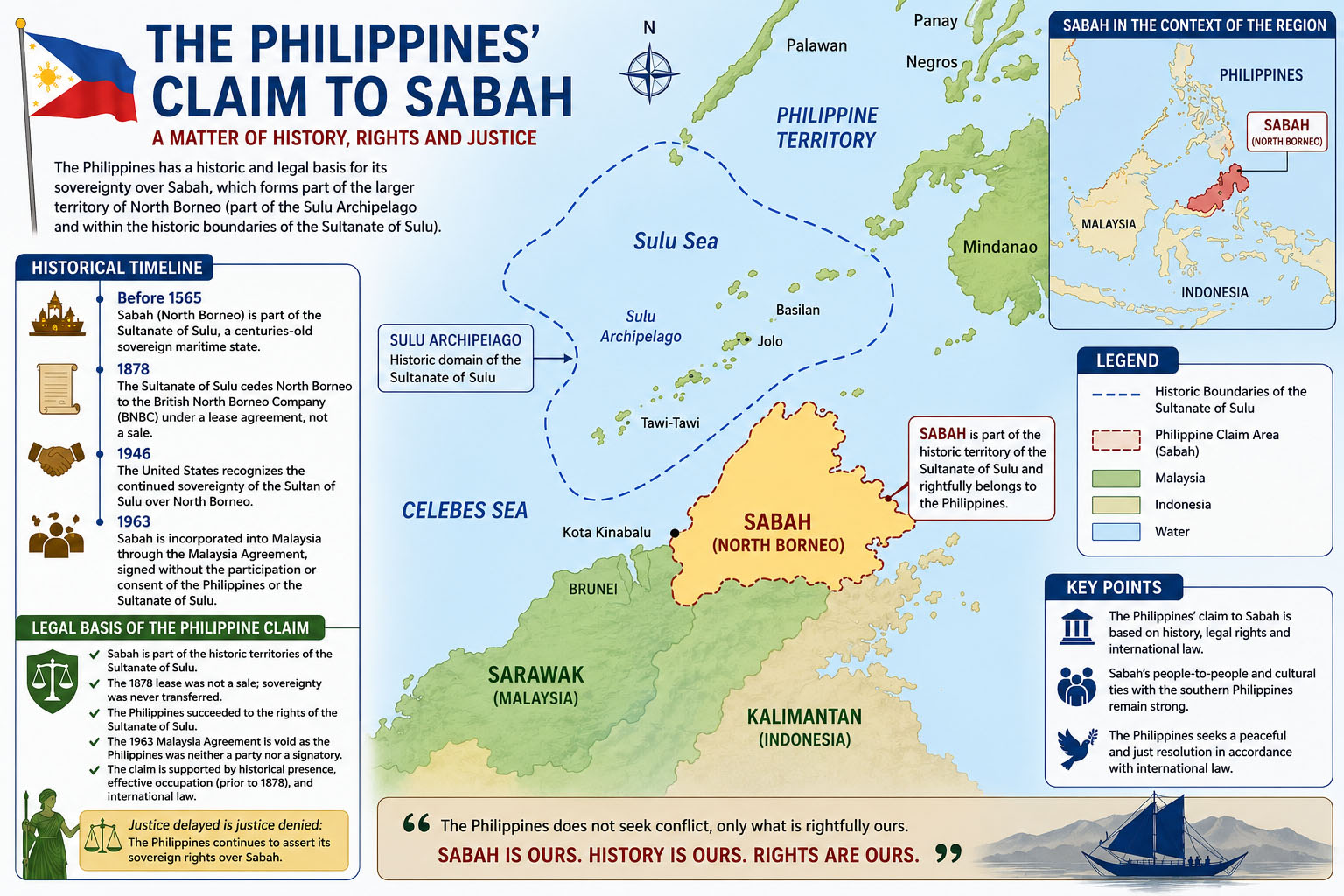
The enduring dispute dates back to 1878, when the Sultan of Sulu signed an agreement with representatives of the British North Borneo Company regarding the territory, obligating them to pay an annual lease. Under the agreement, the territory was merely leased and not sold.
After Malaysia was formed in 1963, its government continued to pay an annual amount to the heirs of the Sultan of Sulu until payments were suspended in 2013.
In 2017, the Kiram family filed for arbitration in a Spanish court, initially seeking $32.2 billion in damages. Malaysia responded in 2019, stating it was willing to resume annual payments if the arbitration was dropped, an offer rejected by the Sulu heirs. Subsequently, in 2022, an arbitration ruling favored the family, ordering Malaysia to pay $14.9 billion in damages to the descendants of the sultanate.
Call for national support and diplomatic talks
While acknowledging that the broader sovereignty issue between the two nations is complex and politically sensitive, Kiram advocated for a practical and mutually beneficial approach through bilateral and state diplomatic talks. She stressed that the issue should not be treated merely as a private family matter involving the Kiram clan, noting that members of the Sultanate are Filipino citizens who have long partnered with the national government for peace and development.
“This is a national issue because it involves the Philippine government, as we are Filipinos too,” Kiram stated, highlighting that the benefits derived from the territory would serve the wider Filipino populace amidst ongoing economic challenges and oil price hikes.
Kiram also expressed support for proposals, such as one by Senator Robin Padilla, to reintegrate the history of Sabah into the Philippine education system to foster greater public awareness and appreciation of the country’s territorial heritage.